
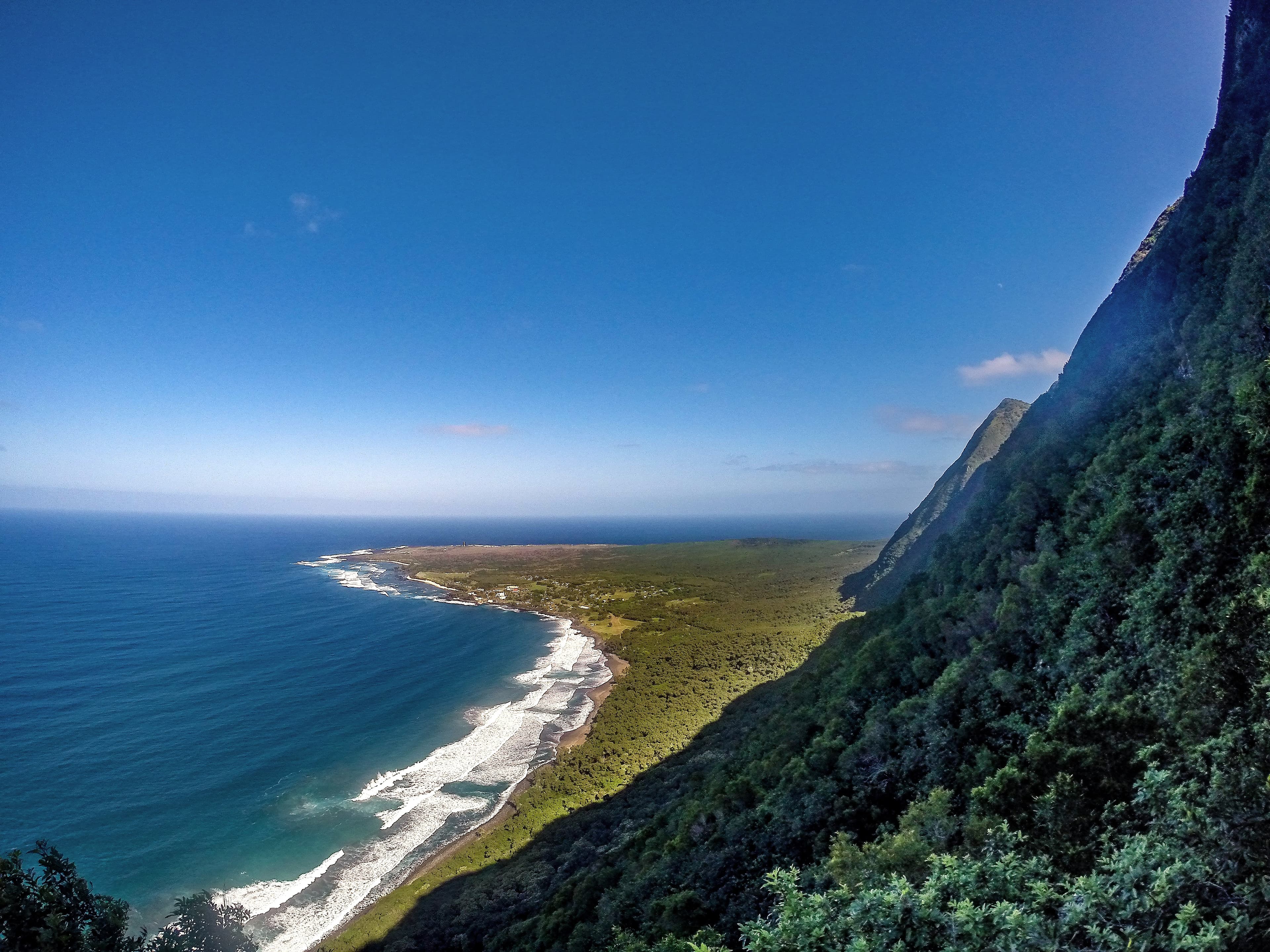
Kalaupapa National Historical Park
When Hansen's disease (leprosy) was introduced to the Hawaiian Islands, King Kamehameha V banished all afflicted to the isolated Kalaupapa Peninsula on the north shore of Molokai.
Photo: Tylor Tanaka / NPS
About Kalaupapa National Historical Park
When Hansen's disease (leprosy) was introduced to the Hawaiian Islands, King Kamehameha V banished all afflicted to the isolated Kalaupapa Peninsula on the north shore of Molokai. Since 1866, more than 8,000 people, mostly Hawaiians, have died at Kalaupapa. Once a prison, Kalaupapa is now a refuge for the few remaining residents who are cured but were forced to live their lives in isolation.
Hours
Park Hours
- Mon
- All Day
- Tue
- All Day
- Wed
- All Day
- Thu
- All Day
- Fri
- All Day
- Sat
- All Day
- Sun
- All Day
Activities
Getting there
Hawaii enjoys warm temperatures year-round, although site conditions at the park can vary depending on weather and time of year. The rainy season is in the winter with the more hot and humid days in the summer. Trade winds are fairly constant and typically blow from the northeast. Daytime temperatures range from 65–75° F in the winter to 80-90°F in the summer. Nighttime temperatures are often in the 60-70°F range.
Frequently asked questions
- What is there to do at Kalaupapa National Historical Park?
- Popular activities include Guided Tours, Living History, Museum Exhibits.